
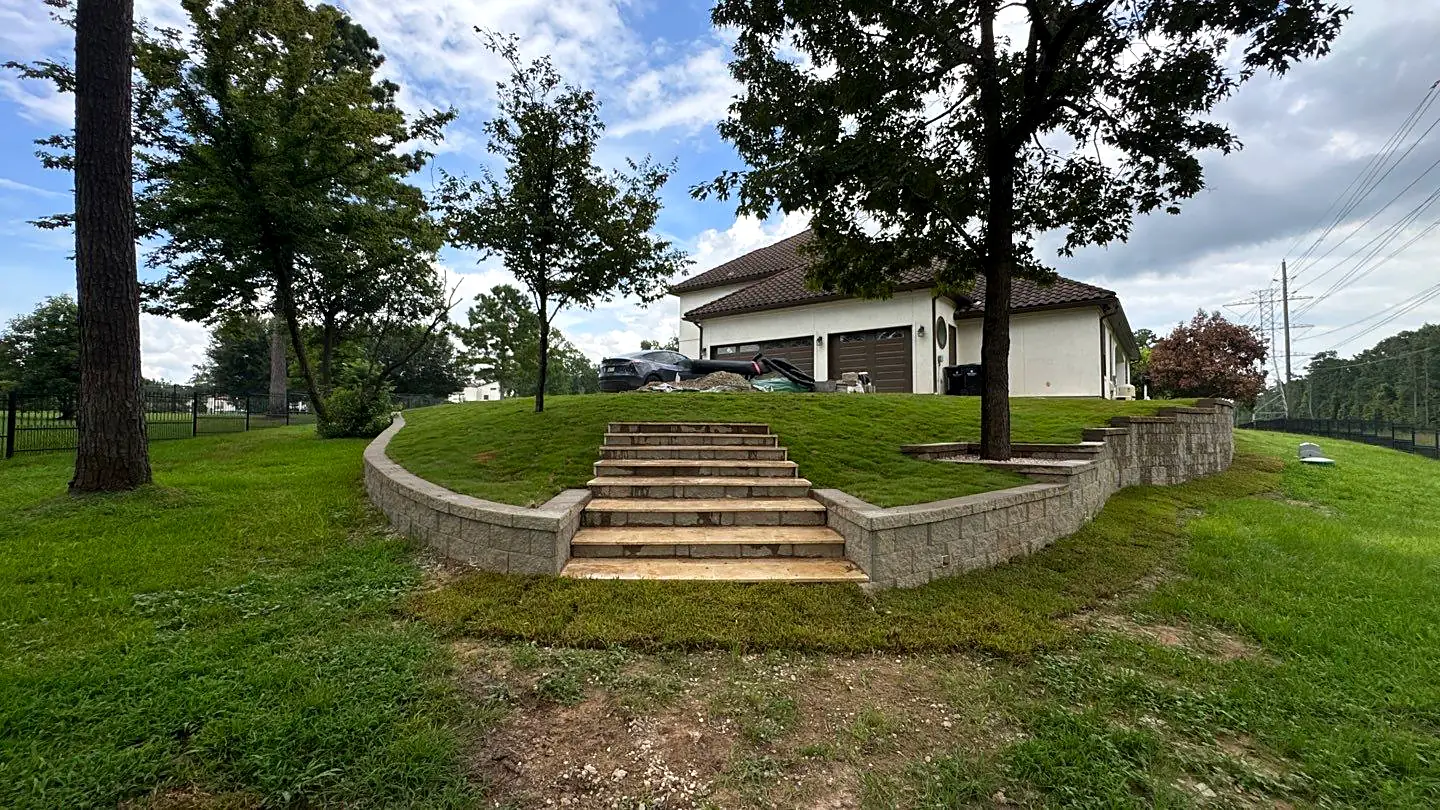
ErosionSoil carried away by moving water, often seen as bare channels, exposed roots or sediment on paving. control in Houston stops soil from leaving your yard every time it rains hard. You see erosion as MulchA layer of organic or mineral material spread over soil to hold moisture, moderate soil temperature and suppress weeds. In practice: In heavy rain, light mulch can float and wash onto paving. Placement and edging should account for water flow. washed onto the sidewalk, beds that sink lower each year, gullies under downspouts, exposed tree roots, gaps opening under the fence line, and on bayou and creek lots, banks that creep closer to the house after every big storm.
Houston rain comes in bursts that can drop several inches in an hour, and bare or thinly covered soil cannot hold up to that kind of flow. Erosion control combines grading, SwaleA shallow, gently sloped channel in the ground, often grassed, that guides surface water toward an outlet. In practice: Side-yard swales between houses are common on Houston lots and are easily blocked by fences, beds or fill., rock, and planting to slow water down, spread it out, and give it a path that does not carry your yard along with it.
What's under it · tap a layer
Sod. Living turf over amended topsoil, graded so rain runs off toward an outlet instead of sitting on the clay.
01
Signs You Need Erosion Control
Watch for soil and mulch on the move. Mulch that ends up on the lawn or walk, beds with exposed edging, and fans of dirt spreading across the patio after a storm all show that water is carrying material. Gullies under downspouts or along a driveway edge mean flow is concentrating in one place.
On sloped yards and waterfront lots, look for undercut banks, leaning fence posts, cracks in the ground near the top of a slope, and roots exposed at the base of trees. Lots along Buffalo Bayou, Brays Bayou, White Oak Bayou, Cypress Creek, and Clear Creek can lose ground quickly when high water moves along the bank.
02
How Erosion Happens on Houston Lots
Erosion comes down to water speed and exposed soil. Clay particles bind together when dry, but once saturated they wash away easily, and the sandier soils found in parts of the metro move even faster. Water picks up speed on slopes and hard surfaces, and when it is funneled into one spot, such as a downspout or a gap under a fence.
Shade makes it worse. Under live oaks and pines, St. Augustine thins out and leaves bare soil exactly where roof and canopy drip land. The fix is to slow the water, cover the soil, and give concentrated flow a hard surface or a pipe to travel in.
03
Our Erosion Control Process
We fix the water first and the soil second, so the repair does not wash out.
- Walk the property to see where water enters, concentrates, and leaves, and where soil is being lost.
- Identify the source: a downspout, a hard surface, a neighbor's runoff, or a slope without cover.
- Plan grading, swales, rock, and planting for each problem zone.
- Check for EasementA strip of the property that someone else, often a utility or drainage district, has rights to use. Building permanent structures in an easement is usually restricted. In practice: Many Houston lots have a rear utility easement. Check the survey before placing a pergola or outdoor kitchen near the back fence., flood control right-of-way, and approvals on waterfront lots.
- Redirect concentrated flow with pipe or lined channels.
- Rebuild washed areas with compacted soil, then install fabric, rock, blanket, or edging.
- Plant or sod exposed soil, and walk the finished work with you.
04
Erosion Control Materials and Methods
Rock does much of the work. River rock or larger stone lines swales and Dry creek bedA rock-lined channel that looks like a natural stream bed and carries water during storms while staying dry the rest of the time., protects pipe outlets, and armors the toe of a slope. Filter fabric under the rock keeps soil from washing out through the gaps. Erosion control blankets made of coir or straw hold soil on bare slopes while new grass or groundcover roots in.
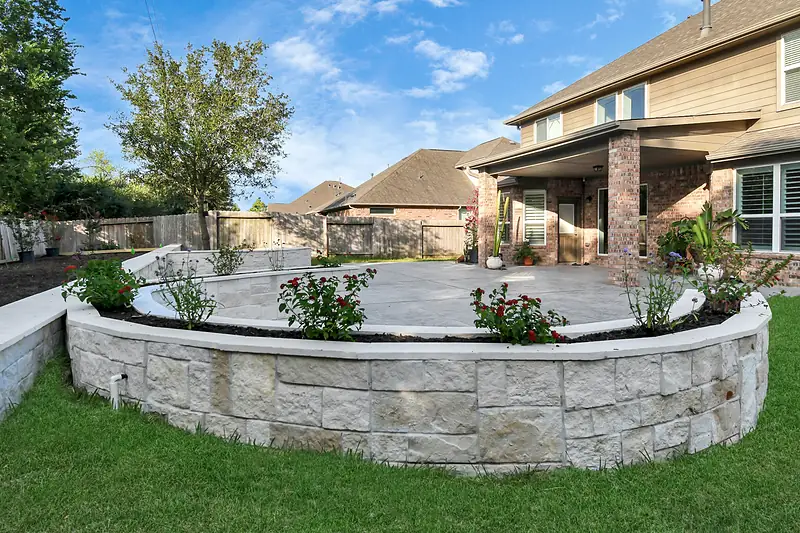
Planting is the long-term answer. Deep-rooted grasses, native groundcovers, and shrubs hold soil far better than bare mulch. Where a slope is too steep to hold with planting alone, a wall terraces it into flatter steps; see our erosion control retaining walls. Steel or stone edging keeps bed soil and mulch in place on gentle grades.
05
Erosion Control Cost Factors in Houston
Cost depends on the size of the affected area, how steep it is, equipment access, and materials. Rock is heavy and often has to be moved by hand or with small equipment through a side gate. Bayou and creek lots usually cost more because of access, approvals, and the scale of work at the bank.
Fixing the source of the water, such as rerouting downspouts or adding a pipe, adds to the scope, but it is usually what keeps the repair from washing out again. Our ballpark price tool offers a starting range.
06
Erosion Control Mistakes We See
The most common mistake is replacing washed-out soil or mulch without changing how water moves. It washes out again, often in the next storm. Close behind: rock dumped on bare soil with no fabric, so it sinks into the mud; landscape timbers stacked as a wall with no drainage, which rot and push over; and sod laid on a slope with nothing to hold it until it roots.
On waterfront lots, the risky mistake is building or placing fill within a flood control easement without approval. That can create a legal problem and a new erosion point downstream at the same time.
07
Pairs Well With Erosion Control
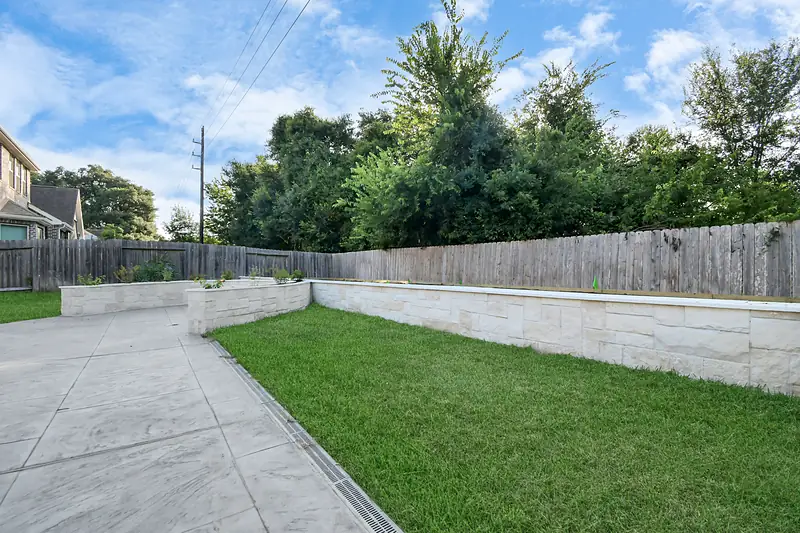
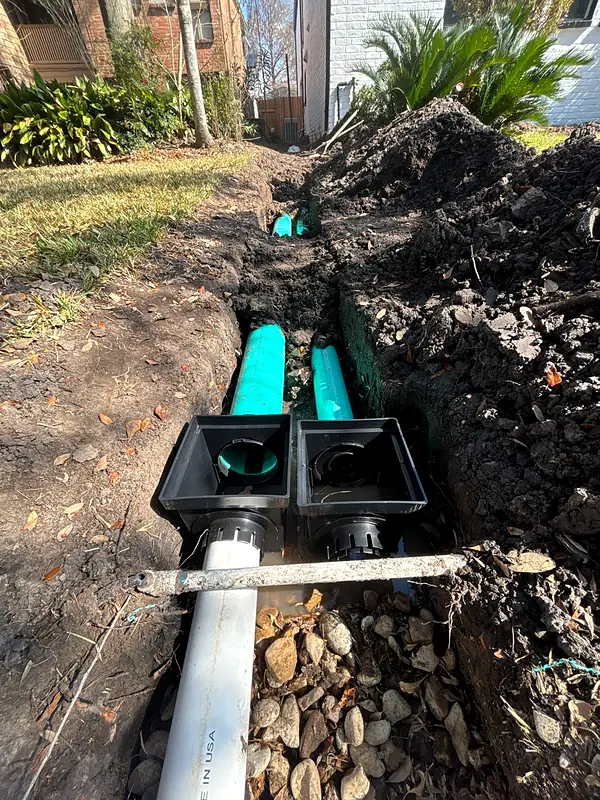
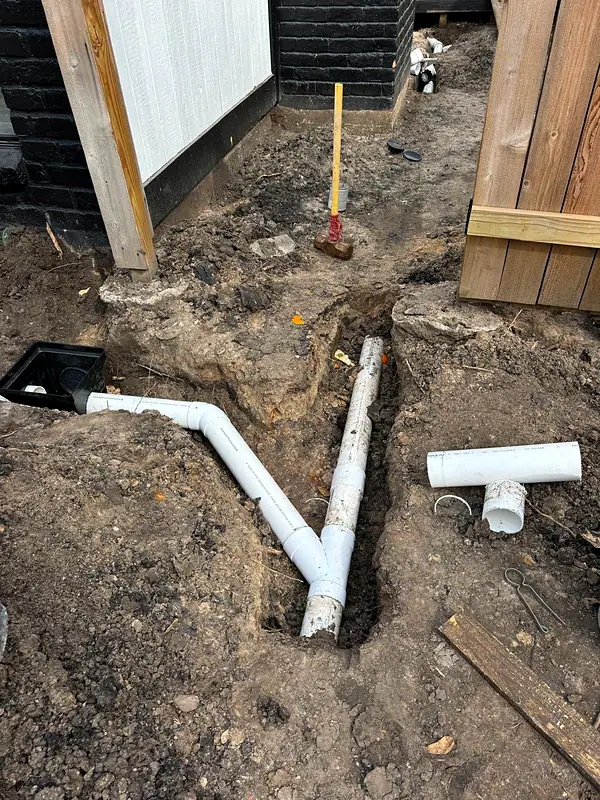
Erosion control works best alongside excavation and grading that reshapes the slope, and surface water drainage that collects runoff before it gains speed. Downspouts carving gullies can be piped underground through a rainwater drainage system. Planting and sod installation finish the job by covering bare ground. All of it falls within our drainage service in Houston.
08
Why Texas Urban Elements
We are a drainage-first company, so we treat erosion as a water problem, not only a landscaping one. A Home Scout walks every property before a proposal is written. One team handles grading, drainage, walls, and planting, so there is no hand-off between trades. You get an itemized proposal, our price-what-we-quote guarantee, our Drainage Performance Guarantee on drainage work, and a 72-hour post-completion walkthrough.
Erosion Control Questions
What is the best way to stop erosion in a flower bed?
First stop the water causing it. Beds often erode because a downspout, a patio edge, or a slope sends concentrated flow through them. Redirect that flow, then add solid edging, denser planting, and a mulch that knits together, such as shredded hardwood, rather than loose pine bark nuggets that float away in heavy rain.
Can I build on the bank of the bayou behind my house?
Possibly, but bayou-adjacent lots often include drainage easements or flood control right-of-way, and work there may need approval from the agency that controls it. Building or placing fill without approval can create problems for you and for neighbors downstream. We review survey and easement information during planning and design within what the location allows.
Will grass alone stop erosion on a slope?
On gentle slopes in full sun, healthy turf can hold soil well once established. On steeper grades, in shade, or where water concentrates, grass struggles and needs help: erosion control blankets while it roots, rock-lined channels for concentrated flow, or terracing. New grass also needs time, so the temporary protection matters as much as the seed or sod.
Why does soil wash out under my fence?
Fence lines often sit along subdivision swales, so water flows right along the bottom of the fence. If boards or a rot board sit on the ground, they block the swale and water cuts around or under them. Raising the bottom, protecting the swale with rock, or regrading along the line usually fixes it.
Related Services in Houston
- Erosion Control Retaining Walls Houston
Slope stabilization systems for properties losing soil to runoff, usually combined with drainage and planting.
- Sod Installation Houston
St. Augustine, Bermuda, and Zoysia sod installed after grading and drainage are confirmed, not before.
- Excavation and Grading Houston
Site prep, cut and fill, and finish grading that sets the slope every drain, slab, and paver base depends on.
- French Drain Installation Houston
Subsurface perforated pipe system that intercepts groundwater and moves it away from your foundation permanently.
- Yard Drainage Solutions Houston
Custom drainage plans for Houston properties with standing water, soggy lawns, or chronic flooding issues.
- Surface Water Drainage Houston
Channel drains, catch basins, and swale systems that capture and redirect sheet flow across flat Houston lots.
Erosion Control is part of our Drainage Service Houston services. Texas Urban Elements is a Houston landscape designer that designs and builds every part of the yard.
Need an Assessment?
We assess your yard and provide a permanent solution. Professional project consultation. A Home Scout personally visits every property.
What you get
- A Home Scout on siteA trained scout walks and measures every property before a proposal is written.
- Itemized written proposalPriced line by line, and we price what we quote.
- One team, every tradeNo subcontractor hand-offs between drainage, base and finish.
- 72-hour walkthroughWe come back after completion to check the work with you.
- Backed by guaranteesDrainage Performance Guarantee and a structural warranty on hardscape.
Texas Urban Elements job photos
Erosion Control jobs in Houston
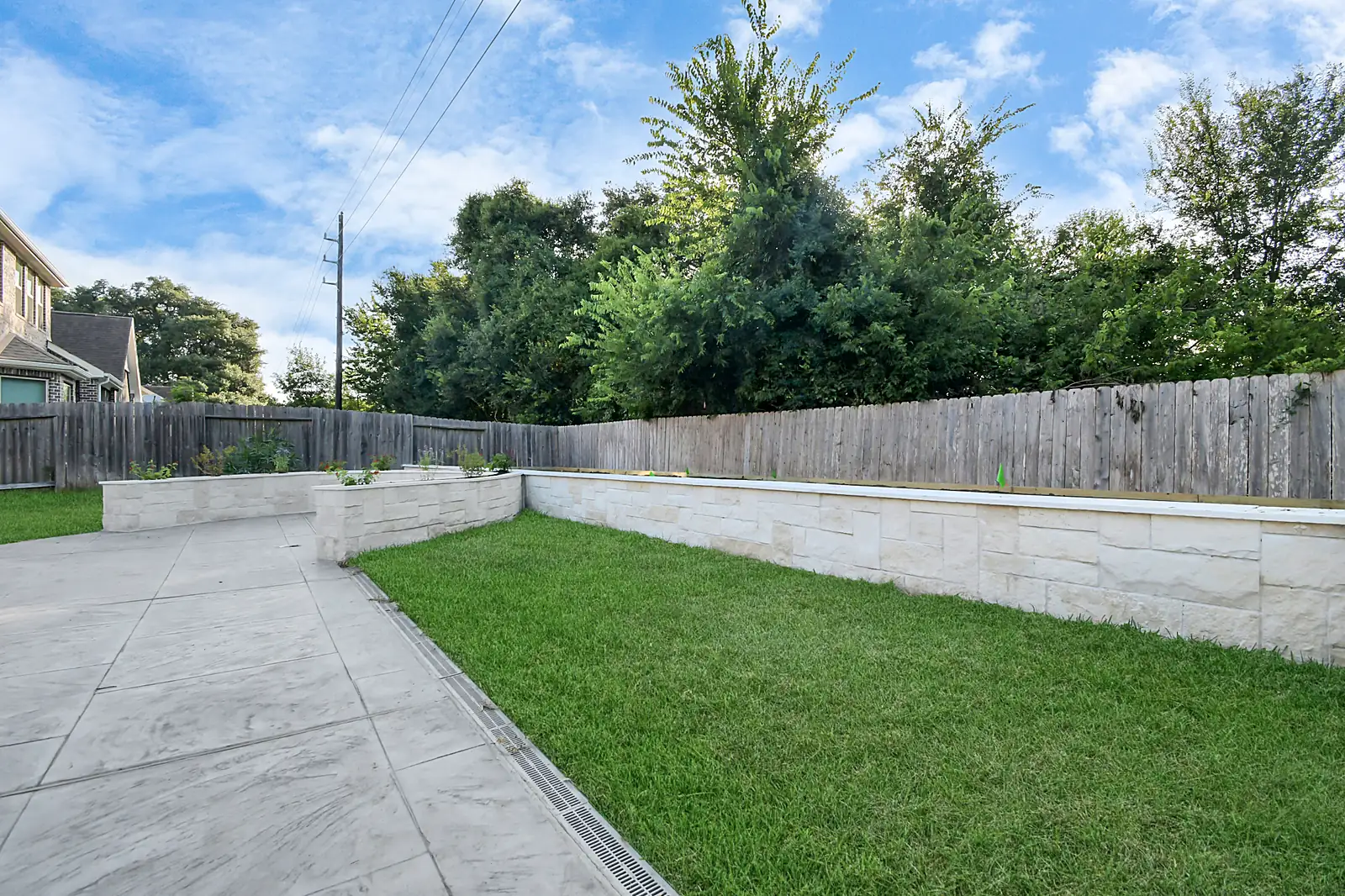
Photos from our own projects, edited for the web. Tap a thumbnail to see it larger.
Let's Get Started
Don't wait until the problem gets worse. Schedule your professional project consultation today.
For a full overview of drainage service options in Houston, see our Drainage Service Houston page.