
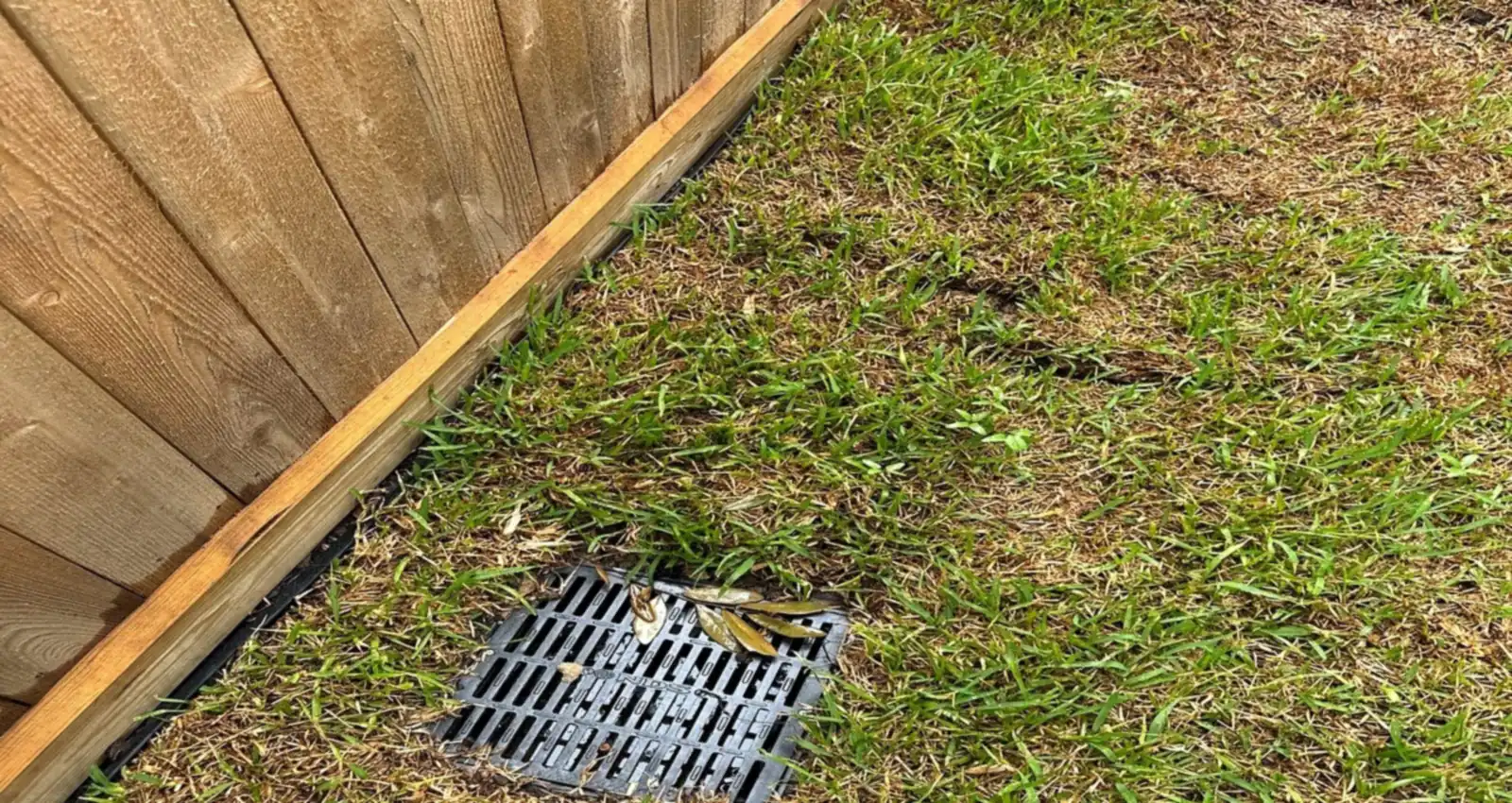
Storm drain cleaning in Houston gets an existing yard drainage system moving water again. Area drainA surface inlet with a grate that collects water from a low spot and sends it into an underground pipe. fill with silt, pop-up emitters get buried under St. Augustine runners, and outlet pipes clog with leaves, pine needles, sand, and roots. A system that worked well when it went in can slow to a trickle after a few seasons, and you usually find out during the worst storm of the year.
We clear clogged yard drains, catch basins, and outlet lines, find out why they clogged, and fix the cause where we can. For clients whose systems we built, cleaning is also part of ongoing system maintenance, a way to confirm that the drainage we installed is still doing its job.
What's under it · tap a layer
Sod. Living turf over amended topsoil, graded so rain runs off toward an outlet instead of sitting on the clay.
01
Signs Your Yard Drains Need Cleaning
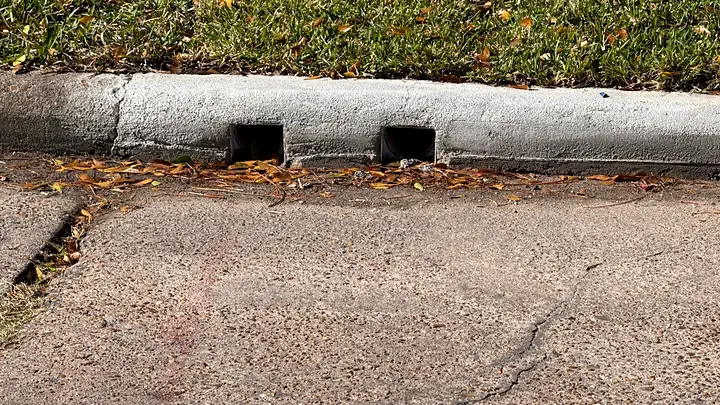
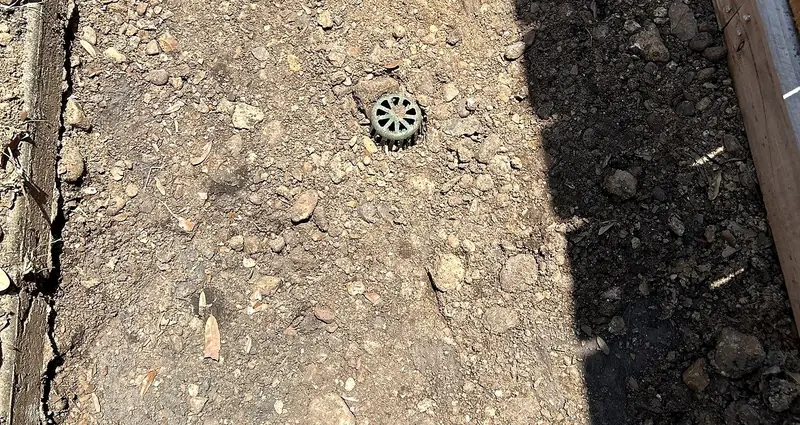
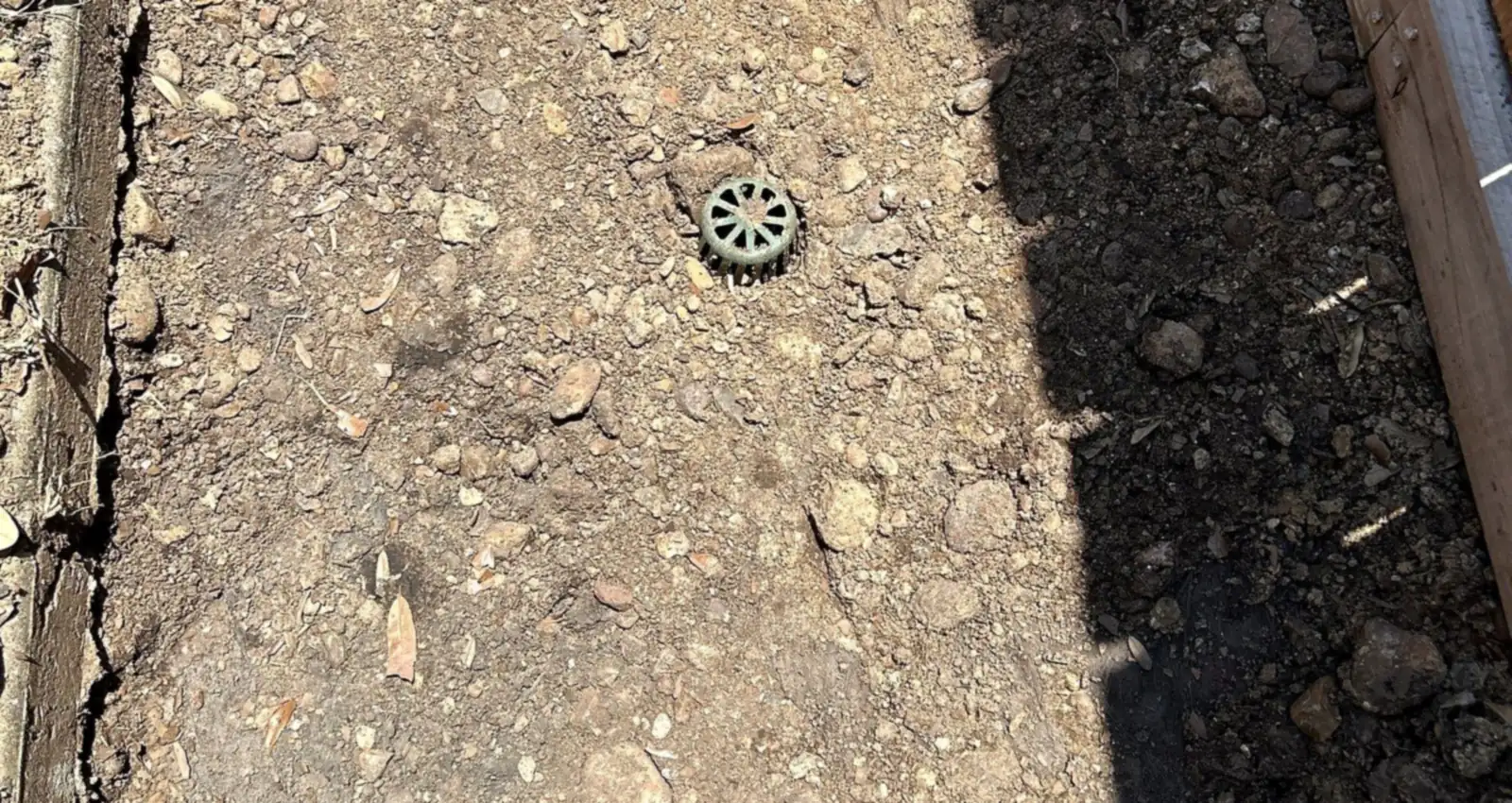
Water sitting on top of a grate instead of draining is the obvious one. Other signs: water bubbling up out of a basin or emitter during heavy rain, downspouts overflowing at the connector, gurgling in the line, a pop-up that never opens, or a curb outlet that dribbles while the yard floods.
Sometimes the sign is a slow change. If areas that used to dry out in a day now stay wet for three, the system is losing capacity. Catching it early is easier than clearing a line that has packed solid.
02
Why Drains Clog in Houston
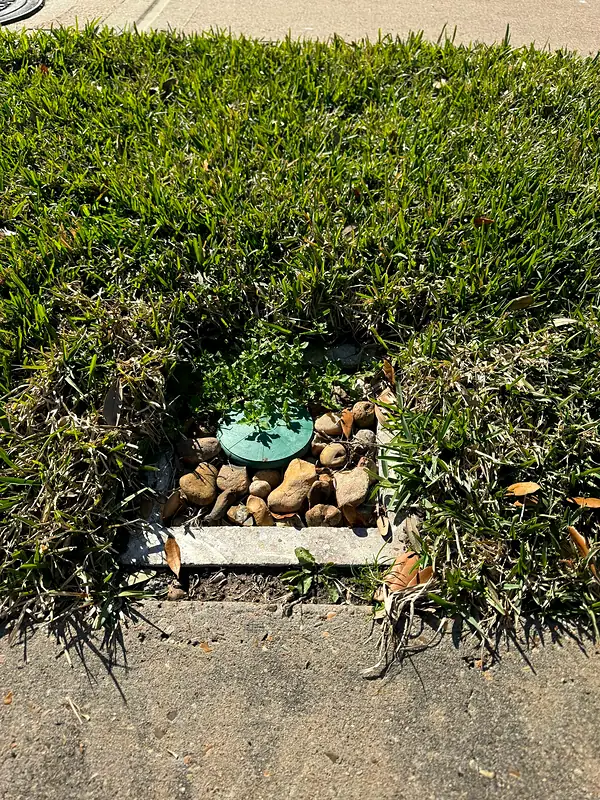
Houston yards produce a lot of debris. Live oaks drop leaves and tassels every spring, pines shed needles all year, and other trees add seed pods. All of it washes toward grates. Clay silt rides into lines during every storm, and paver joint sand, bed MulchA layer of organic or mineral material spread over soil to hold moisture, moderate soil temperature and suppress weeds. In practice: In heavy rain, light mulch can float and wash onto paving. Placement and edging should account for water flow., and grass clippings follow.
Roots are the other big cause, especially in older systems with loose joints or perforated pipe near trees. St. Augustine and Bermuda runners also grow over emitters and grates. And some lines were never right to begin with: corrugated pipe with sags that trap sediment, or runs with almost no fall that let debris settle. Cleaning helps those, but they may need repair to stay clear.
03
Our Storm Drain Cleaning Process
We work from the outlet back, so whatever we flush out has somewhere to go.
- Walk the system with you to locate basins, grates, downspout connectors, cleanouts, and outlets.
- Open the outlet and clear it first.
- Remove debris and silt from basin sumps by hand.
- Jet the lines from cleanouts or basins to flush sediment and break up clogs.
- Clear and reset pop-up emitters, trim grass back from grates, and make sure lids open freely.
- Flow test each inlet and note anything that still drains slowly.
- Report what we found: clear lines, damaged pipe, root intrusion, or design problems that need repair.
04
Storm Drain Cleaning Methods and Options
Most residential yard drain lines are small diameter pipe, which a jetter can scour from end to end. Jetting uses a high-pressure water nozzle that pulls itself through the pipe and flushes debris back toward an opening. It works best on rigid pipe such as SDR-35 or PVC. Corrugated pipe can be cleaned too, but its ridges hold sediment and it can be damaged by aggressive cleaning.
When a line will not clear, the problem is usually physical: a crushed section, a separated joint, or a root mass. Those sections need to be dug up and replaced. Where clogs keep coming back from debris, small upgrades help, such as dome grates in planting beds, debris filters at downspout connectors, or gutter guard installation to keep leaves out of the system at the roof.
05
System Maintenance for Past Clients
If we installed your drainage, cleaning is how we keep in touch with the system after the job is done. A maintenance visit lets us check every inlet and outlet, clear debris before it builds up, and confirm the system still performs the way it did at the walkthrough. Many homeowners like a visit in spring after oak leaf drop, or before hurricane season starts in June.
For homeowners whose systems were installed by someone else, cleaning is often the first step in learning what is actually in the ground. Sometimes the system only needs a good flush. Sometimes cleaning reveals that it needs repair, new outlets, or a redesign.
06
Storm Drain Cleaning Cost Factors
Cost depends on how many basins, emitters, and outlets the system has, the total length of line, how accessible the cleanouts are, and how badly the lines are packed. A system with cleanouts in the right places is faster to service than one where the only access is through a grate. Repairs found during cleaning, such as replacing a crushed section, are quoted separately in writing before any work happens. Our ballpark price tool shows typical ranges for drainage work.
07
Mistakes That Make Drains Clog Again
Cleaning a basin without clearing the outlet only moves the clog. Pushing debris downstream into a sag or dead end does the same. Running a plumbing snake through corrugated pipe can tear it. And ignoring the source, such as the oak above the basin or a mulch bed sliding onto the grate, means the problem returns after the next storm.
If a line keeps clogging, it may be time to replace sections with rigid pipe, add cleanouts, or rebuild the system as part of new yard drainage solutions.
08
Why Texas Urban Elements for Drain Cleaning and Maintenance
We build drainage systems, so we know what a healthy one looks like and where they tend to fail. Our NDS Certified drainage specialists clean and service the work we do through catch basin installation and French drain installation, as well as systems other companies put in. It is one part of our full drainage service in Houston.
Any repairs are itemized in writing and covered by our price-what-we-quote guarantee. We have served Houston since 2016.
Storm Drain Cleaning Questions
How often should yard drains be cleaned?
Most Houston yard drainage systems benefit from a check at least once a year, and more often under heavy tree cover. A good schedule is spring, after live oaks drop their leaves, and again before hurricane season. Clear grates yourself after big storms, and have the lines flushed if water starts draining slower than it used to.
Can I clean my yard drain myself?
You can lift grates, scoop out basin sumps, clear grass off pop-up emitters, and flush lines with a garden hose. That handles light debris. A line packed with silt or roots usually needs a jetter, and a hand snake can damage corrugated pipe. If water still backs up after basic cleaning, the line needs a closer look.
Why is my pop-up emitter stuck?
Pop-ups stick closed when grass grows over the lid, soil builds up around it, or debris jams the hinge. They also stay shut when the line feeding them is clogged or has a sag, so water never builds enough pressure to lift the lid. Clearing the emitter and flushing the line usually solves it.
Is storm drain cleaning the same as clearing the city storm sewer?
No. We clean private drainage on your property: yard drains, catch basins, downspout lines, and the outlet pipes running to the curb. Street inlets and the pipes under the street belong to the city or county. If an inlet in the street is blocked, report it to your city, for example through Houston 311.
What if cleaning does not fix the problem?
Then the line likely has a physical issue: crushed pipe, a separated joint, a sag, or roots. We note what we find and give you a written option for repair. In some cases the original system was undersized or has no real outlet, and the right fix is a redesign rather than repeated cleaning visits.
Related Services in Houston
- Catch Basin Installation Houston
Catch basins set at the low points of your yard, patio, and driveway, tied into solid pipe that carries water to the street.
- French Drain Installation Houston
Subsurface perforated pipe system that intercepts groundwater and moves it away from your foundation permanently.
- Gutter Guard Installation Houston
Guards fitted to new or existing gutters to keep oak leaves, pine needles, and seed pods out of the trough.
- Yard Drainage Solutions Houston
Custom drainage plans for Houston properties with standing water, soggy lawns, or chronic flooding issues.
- Surface Water Drainage Houston
Channel drains, catch basins, and swale systems that capture and redirect sheet flow across flat Houston lots.
- Land Drainage Installation Houston
Full-property drainage assessments and system installation for large lots, new builds, and problem properties.
Storm Drain Cleaning is part of our Drainage Service Houston services. Texas Urban Elements is a landscape design company in Houston that designs and builds every part of the yard.
Need an Assessment?
We assess your yard and provide a permanent solution. Professional project consultation. A Home Scout personally visits every property.
What you get
- A Home Scout on siteA trained scout walks and measures every property before a proposal is written.
- Itemized written proposalPriced line by line, and we price what we quote.
- One team, every tradeNo subcontractor hand-offs between drainage, base and finish.
- 72-hour walkthroughWe come back after completion to check the work with you.
- Backed by guaranteesDrainage Performance Guarantee and a structural warranty on hardscape.
Texas Urban Elements job photos
Storm Drain Cleaning jobs in Houston
Photos from our own projects, edited for the web. Tap a thumbnail to see it larger.
Let's Get Started
Don't wait until the problem gets worse. Schedule your professional project consultation today.
For a full overview of drainage service options in Houston, see our Drainage Service Houston page.