
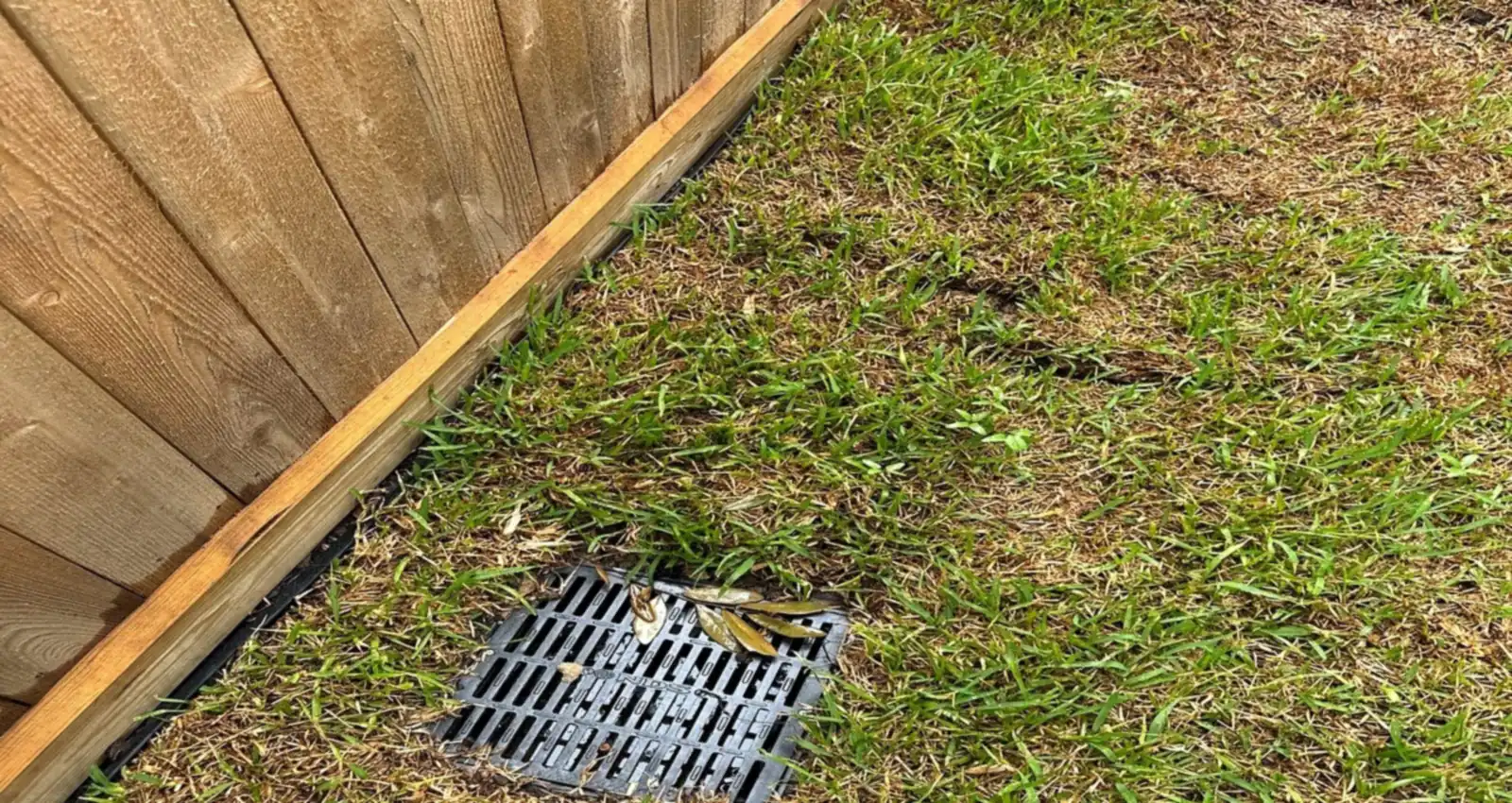
Area drainA surface inlet with a grate that collects water from a low spot and sends it into an underground pipe. installation in Houston is the most direct way to collect water at a low point and get it out of the yard. A catch basin is a box set into the ground with a grate on top. Water flows in at the surface, drops into the basin, and leaves through solid pipe connected to its side, running to the street or another legal outlet.
Basins are simple, but where they go and how they are set decides whether they work. On flat Houston lots the low point may be only an inch lower than the ground around it, and a basin set slightly too high will sit dry while the puddle forms beside it. Here is how we place, size, and install them.
What's under it · tap a layer
Sod. Living turf over amended topsoil, graded so rain runs off toward an outlet instead of sitting on the clay.
01
Signs a Catch Basin Is the Right Fix
A catch basin fits when water collects in one predictable place: a puddle at the bottom of a sloped lawn, a patio corner that holds water after every storm, the strip between the driveway and the house, or the spot where two side-yard SwaleA shallow, gently sloped channel in the ground, often grassed, that guides surface water toward an outlet. In practice: Side-yard swales between houses are common on Houston lots and are easily blocked by fences, beds or fill. meet. If you can point to where the water ends up, a basin can usually catch it there.
Basins are less effective when the problem is saturated soil across a broad area, or water that never pools at the surface at all. Those cases call for a French drainA gravel-filled trench with a perforated pipe that collects water from the soil and carries it away. In practice: In heavy clay, a French drain mainly works by intercepting water near the surface. It must slope to a real outlet to be effective. or regrading, sometimes combined with basins.
02
How Catch Basins Work in Houston Soil
A catch basin works by giving surface water an easier route than soaking into clay. Water reaches the grate, falls into the box, and exits through an outlet pipe set a few inches above the basin floor. The space below the outlet acts as a sump, where sand, silt, and debris settle instead of washing into the line.
Because Expansive clayClay soil that swells when wet and shrinks when dry. Much of the Houston area sits on it, and it affects foundations, paving and drainage design. In practice: Keeping soil moisture around a slab foundation steady, without ponding or bone-dry spells, is part of good drainage design here. barely absorbs water, the basin is not a soak pit. It only works if the outlet pipe has continuous fall to a real OutfallThe final point where collected water leaves the system, such as a street curb, storm sewer or approved ditch. In practice: A drainage system is only as good as its outfall. If the outfall is too high or blocked, the water backs up.. We set the rim slightly below the surrounding grade so water flows in from every side, then shape the soil or sod around it to funnel flow toward the grate.
03
Our Catch Basin Installation Process
Placement is everything, so most of the care goes into the first two steps.
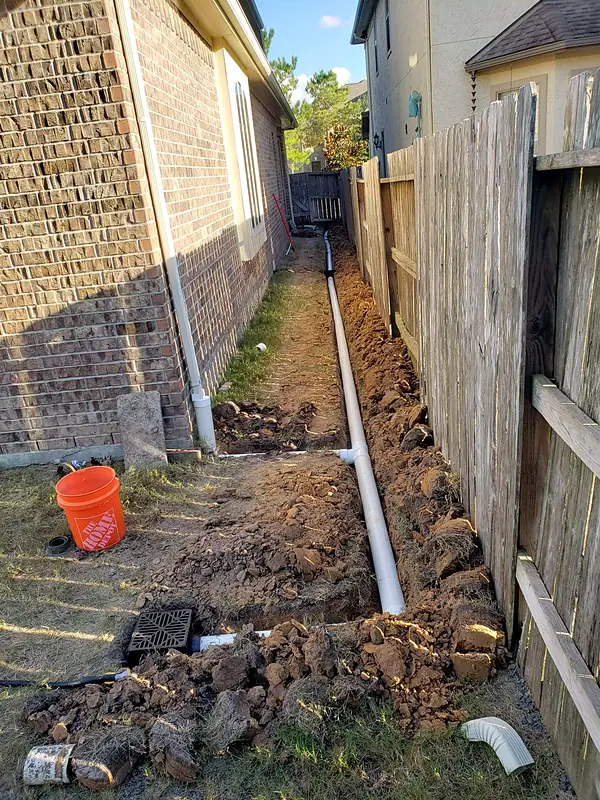
- Find the true low point by watching water flow and measuring elevations, not by eye.
- Plan the pipe route and confirm fall all the way to the outlet.
- Call 811 for utility locates before any digging.
- Excavate and set the basin on a compacted, level base so it will not settle or tilt.
- Connect solid pipe to the basin outlet and run it with steady fall to the discharge point.
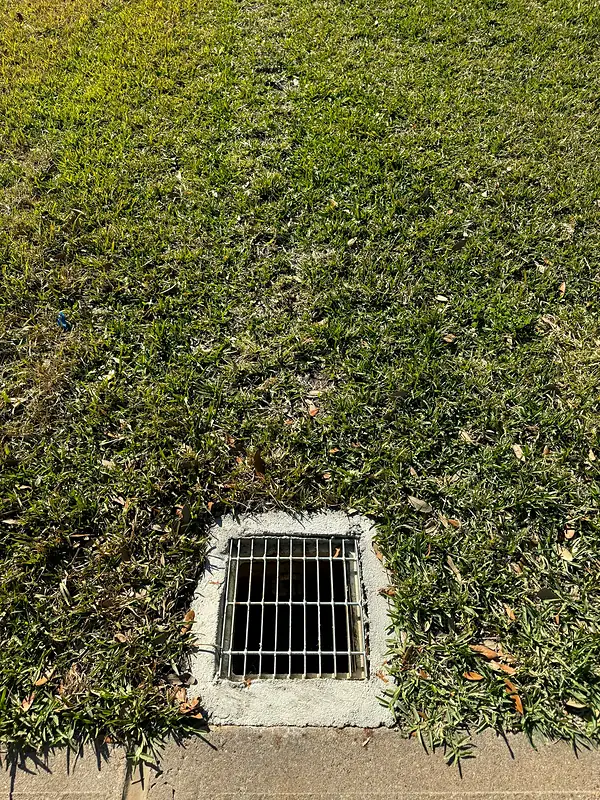
- Set the grate just below Grade and slopeGrade is the level of the ground surface, and finished grade is that level after work is complete. Slope, or fall, is the rate at which a surface drops over distance. Every hard surface needs some fall so water does not sit on it., then backfill and compact around the box in layers.
- Shape the surrounding grade, restore sod, and flood test the basin.
04
Catch Basin Sizes, Grates, and Materials
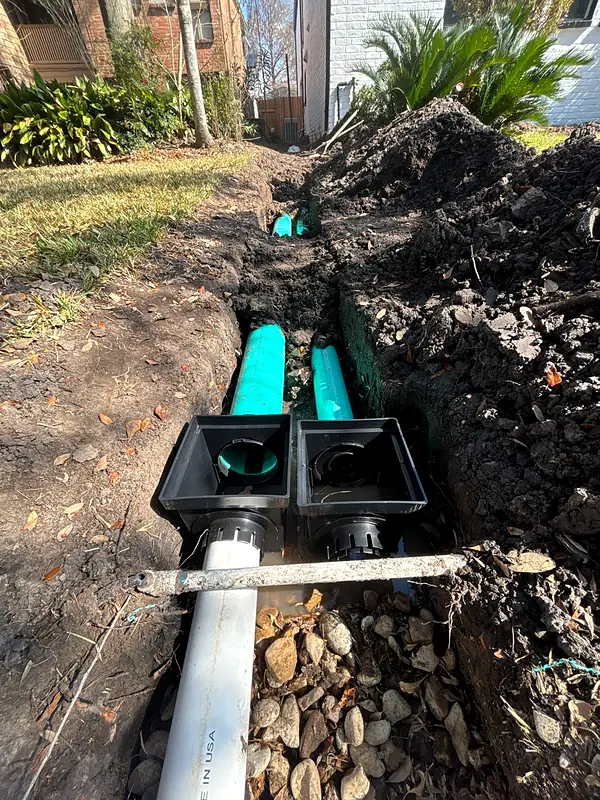
We install NDS catch basins, which come in several sizes, from compact square boxes for patios and beds to larger basins for areas that collect a lot of runoff. Basins can be stacked with risers when the pipe has to run deeper, and multiple side outlets let one basin take in branch lines from other drains.
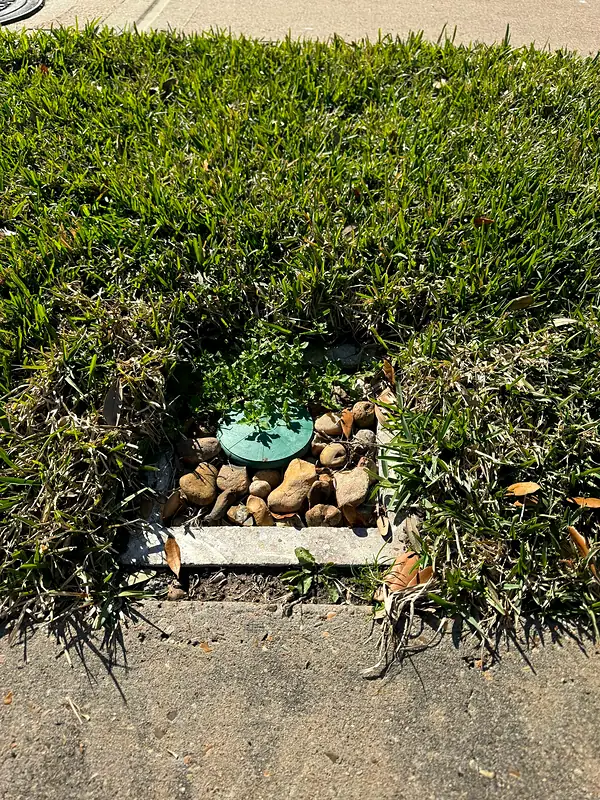
Grate choice depends on location. Flat grates sit flush in lawns and patios. Atrium or dome grates suit planting beds, where MulchA layer of organic or mineral material spread over soil to hold moisture, moderate soil temperature and suppress weeds. In practice: In heavy rain, light mulch can float and wash onto paving. Placement and edging should account for water flow. and leaves would bury a flat grate. Green grates disappear into St. Augustine, and black or gray ones match hardscape. In driveways, the grate and basin must be rated for vehicle traffic. Connecting pipe is solid SDR-35 or solid PVC.
05
Catch Basin Cost Factors in Houston
The number of basins, their size, and the length of pipe to the outlet are the main factors. Basins set into concrete or pavers cost more than basins in a lawn because of cutting and patching. Traffic-rated grates, deeper installs, and pump basins on lots with no fall add to the total.
Most yards need more than one basin tied together on a shared line. Our ballpark price tool gives a starting point, and the itemized proposal lists each basin and pipe run so you can see where the cost comes from.
06
Catch Basin Mistakes We Correct
The most common mistake is a grate set too high, often because the basin settled into loose backfill or was set to the old grade before new sod went down. Water flows around it and pools beside it. We also find basins draining into a dead-end gravel pit, basins connected with corrugated pipe that sags under the yard, and single basins asked to handle an entire roof and patio.
Another issue is placement under trees with no plan for leaves. Live oaks drop leaves in spring and pines shed needles year round, and a flat grate under either will clog. The right grate plus a simple cleaning routine prevents that.
07
Work That Pairs With Catch Basins
Catch basins are often one part of a larger surface water drainage system that includes Channel drainA long, narrow grated drain set into paving to catch sheet flow along an edge, such as at a garage door or patio edge. along hard surfaces. Downspouts can tie into the same line through a rainwater drainage system. Where water pools because the yard is shaped wrong, lawn grading and leveling sends it toward the basin. For an overview of the whole category, see our drainage service in Houston.
08
Why Texas Urban Elements
Our team includes NDS Certified drainage specialists who install the basins, pipe, and outlets themselves. A Home Scout walks your property before writing a proposal, and the same crew finishes the sod, concrete, or pavers around each basin, so the grate ends up at the right height. You get an itemized proposal under our price-what-we-quote guarantee, a Drainage Performance Guarantee, and a 72-hour post-completion walkthrough.
Catch Basin Installation Questions
What is the difference between a catch basin and a French drain?
A catch basin collects water at the surface at one point and sends it through solid pipe. A French drain is a buried trench of gravel and perforated pipe that collects water from saturated soil along its length. Basins handle puddles and runoff, while French drains handle wet ground. Many Houston systems use both on the same outlet.
How many catch basins does my yard need?
It depends on how many separate low points the yard has and how much area drains to each one. A small patio may need one, while a backyard with a long side yard, a patio, and several downspouts may need three or more on a shared line. The drainage plan sets the count from the grade, not from a standard number.
Can a catch basin go in a driveway?
Yes, with the right parts. Driveway basins need traffic-rated grates and a solid concrete surround so they do not shift under tire loads. Often a channel drain across the driveway works better than a single basin, because driveway water moves as a sheet rather than to one point. The choice depends on how the drive slopes.
How do I keep my catch basin from clogging?
Lift the grate a few times a year and scoop leaves and silt out of the sump, especially after oak leaf drop in spring and before hurricane season. Keep mulch and grass clippings away from the grate. If water still backs up once the basin is clear, the outlet line may be blocked and need storm drain cleaning.
Will a catch basin hold standing water?
A small amount of water can sit in the sump below the outlet after a storm, which is normal and helps trap sediment. A basin that stays full to the grate means the outlet line is blocked, has a sag, or lacks fall to its discharge point. That is a sign the line needs to be checked rather than a basin problem.
Related Services in Houston
- French Drain Installation Houston
Subsurface perforated pipe system that intercepts groundwater and moves it away from your foundation permanently.
- Storm Drain Cleaning Houston
Jetting and clearing of clogged yard drains, catch basins, and outlet pipes so an existing system moves water again.
- Downspout Rerouting Houston
Downspouts moved, extended, and tied underground so roof water leaves the foundation instead of dumping beside it.
- Yard Drainage Solutions Houston
Custom drainage plans for Houston properties with standing water, soggy lawns, or chronic flooding issues.
- Surface Water Drainage Houston
Channel drains, catch basins, and swale systems that capture and redirect sheet flow across flat Houston lots.
- Land Drainage Installation Houston
Full-property drainage assessments and system installation for large lots, new builds, and problem properties.
Catch Basin Installation is part of our Drainage Service Houston services. Texas Urban Elements is a landscape designer in Houston that designs and builds every part of the yard.
Need an Assessment?
We assess your yard and provide a permanent solution. Professional project consultation. A Home Scout personally visits every property.
What you get
- A Home Scout on siteA trained scout walks and measures every property before a proposal is written.
- Itemized written proposalPriced line by line, and we price what we quote.
- One team, every tradeNo subcontractor hand-offs between drainage, base and finish.
- 72-hour walkthroughWe come back after completion to check the work with you.
- Backed by guaranteesDrainage Performance Guarantee and a structural warranty on hardscape.
Texas Urban Elements job photos
Catch Basin Installation jobs in Houston
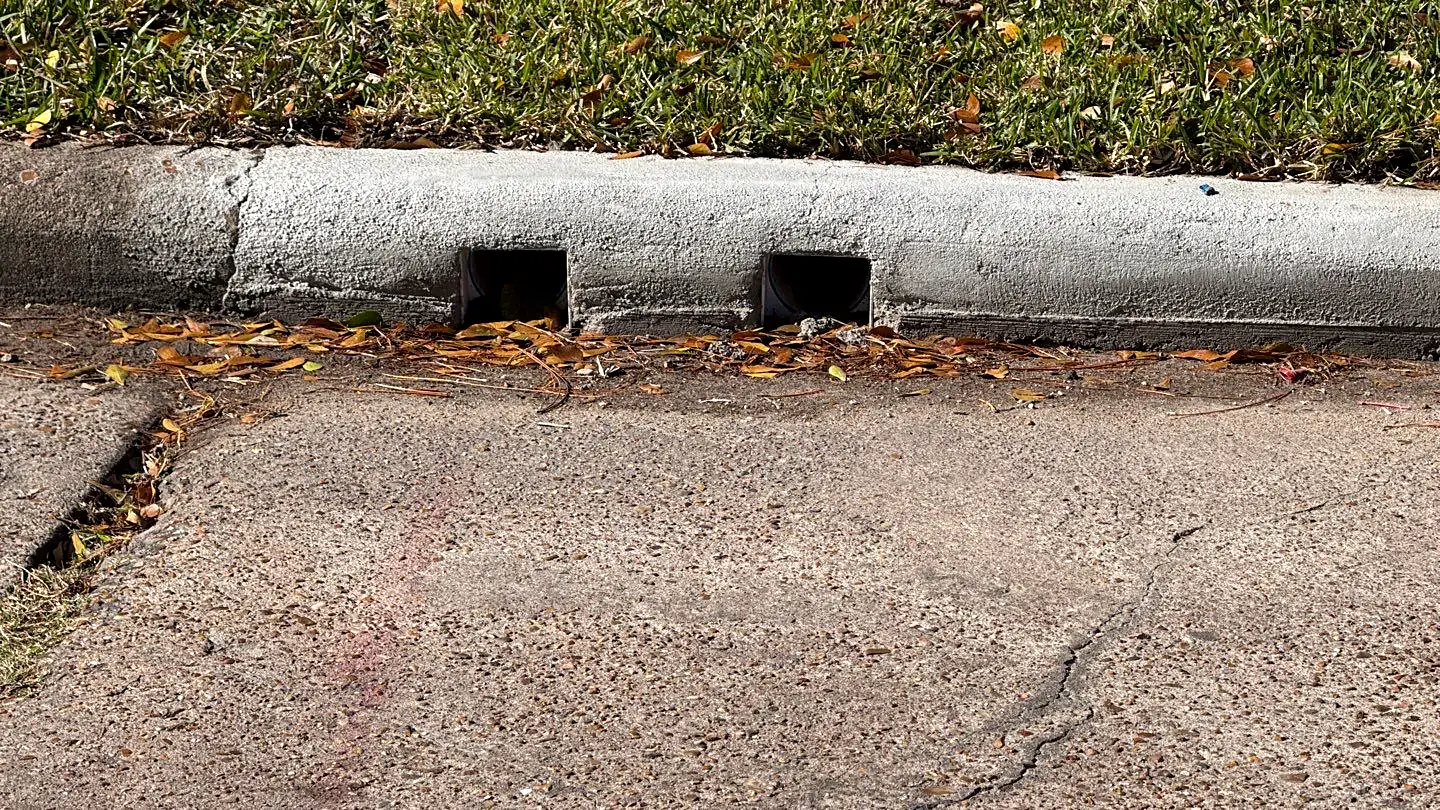
Photos from our own projects, edited for the web. Tap a thumbnail to see it larger.
Let's Get Started
Don't wait until the problem gets worse. Schedule your professional project consultation today.
For a full overview of drainage service options in Houston, see our Drainage Service Houston page.